

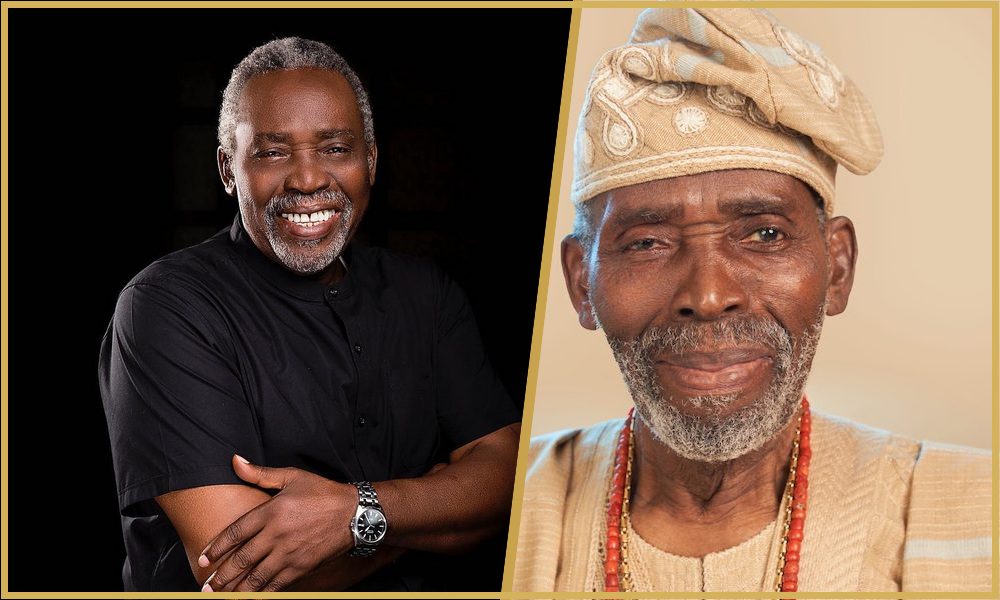
Lagos, 16 September 2026 | Veteran Nigerian actor and film executive Olu Jacobs has died at the age of 84, bringing an extraordinary career spanning theatre, television and film to an end.
His son, Olusoji Jacobs, confirmed the actor’s death through a family statement shared on Instagram on Wednesday, 16 September 2026.
“It is with gratitude to God for a life well lived and fought that we announce the passing of our dear husband, father, grandfather and uncle,” the statement read.
The family described Jacobs as the “Lion of Lufodo” and asked bloggers, social media users and members of the public to respect their privacy while they mourn.
His cause of death was not disclosed in the announcement.
Olu Jacobs remembered as the Lion of Lufodo
Born Oludotun Baiyewu Jacobs on 11 July 1942, the celebrated actor became one of the most respected and recognisable figures in African cinema.
He developed an interest in acting while growing up in Kano, where he participated in debating and drama activities at school. A performance by Nigerian theatre pioneer Hubert Ogunde reportedly strengthened his desire to pursue acting professionally.
Jacobs later travelled to England and trained at the prestigious Royal Academy of Dramatic Art in London.
His professional journey began in British theatre before expanding into television and international cinema. During the 1970s, he appeared in British productions including The Goodies, Till Death Us Do Part, Barlow at Large, The Tomorrow People and The Professionals.
He also appeared in international films such as The Dogs of War, Baby: Secret of the Lost Legend and Roman Polanski’s Pirates.
A commanding presence in Nollywood
Although Jacobs built an impressive international résumé, it was his work in Nigeria that made him a household name across Africa.
After returning home, he became one of the performers who helped establish the professional foundations of modern Nollywood. His distinctive voice, commanding screen presence and ability to portray powerful characters made him a favourite among filmmakers and audiences.
He frequently played kings, traditional leaders, wealthy patriarchs and complex father figures. However, his range extended far beyond those authoritative roles.
Jacobs could be intimidating in one production, humorous in another and deeply emotional in the next. That versatility allowed him to remain relevant as Nollywood evolved from television dramas and home videos into an internationally recognised film industry.
Among his notable Nigerian productions were Dancing Heart, My Kingdom, Oloibiri, Dry, The Antique, Adesuwa and The Royal Hibiscus Hotel.
Awards recognised Olu Jacobs’ remarkable career
Jacobs received several major honours during his career.
In 2007, he won the Africa Movie Academy Award for Best Actor in a Leading Role. He later received an Industry Merit Award at the Africa Magic Viewers’ Choice Awards for his contribution to acting.
The veteran star also received lifetime achievement recognition from major African film organisations.
Furthermore, the Nigerian government conferred him with the national honour of Member of the Order of the Federal Republic in 2011. The award recognised his longstanding contribution to film, theatre and Nigeria’s creative sector.
However, his influence was not limited to his performances.
Together with his wife, veteran actress Joke Silva, Jacobs co-founded the Lufodo Group and the Lufodo Academy of Performing Arts. Through the organisation, the couple helped train and support younger actors, directors and other creative professionals.
Olu Jacobs and Joke Silva built an enduring partnership
Jacobs and Joke Silva became one of the most admired couples in the Nigerian entertainment industry.
Their relationship attracted respect because they maintained successful individual careers while also building businesses and creative projects together. Jacobs supported Silva’s decision to continue using her professional name after their marriage, recognising that she had already created her own identity as an actress.
In later years, Silva became her husband’s primary caregiver as his health declined.
She revealed in 2021 that Jacobs was living with dementia with Lewy bodies, a progressive condition that can affect memory, movement, behaviour and thinking.
The illness gradually reduced his public appearances. Nevertheless, Silva continued to speak openly about their family’s experience while protecting his dignity.
Jacobs celebrated his 84th birthday on 11 July 2026, just over two months before his death.
Family confirmation ends years of false death reports
Before the official announcement, Olu Jacobs had repeatedly become the subject of false death reports online.
His family was forced to deny similar rumours on several occasions, including a widely circulated claim in 2024. At the time, relatives confirmed that the actor was alive and criticised the spread of unverified information.
However, Wednesday’s announcement came directly from his wife and son.
The family’s request for privacy was particularly important given those previous experiences. It also served as a reminder that the actor was more than a public figure. He was a husband, father, grandfather and cherished member of his family.
Nollywood stars pay tribute to a screen icon
Following confirmation of his death, tributes began pouring in from actors, filmmakers and admirers across Africa.
Comedian and actor Mr Macaroni described Jacobs as a legend, an icon and an inspiration. Actor Shawn Faqua remembered him as an “Iroko”, while singer Darey Art Alade offered a moving farewell.
Other entertainers praised the joy Jacobs brought to audiences and the doors he opened for younger African performers.
His death represents the loss of one of the artists who connected Nigeria’s classical theatre tradition with the rise of Nollywood.
Yet Olu Jacobs leaves behind more than a long list of film credits. His performances shaped childhood memories, introduced African stories to international audiences and helped establish a standard of professionalism for generations of actors.
The Lion of Lufodo may have taken his final bow, but his voice, characters and influence will remain part of African cinema for decades to come.

